
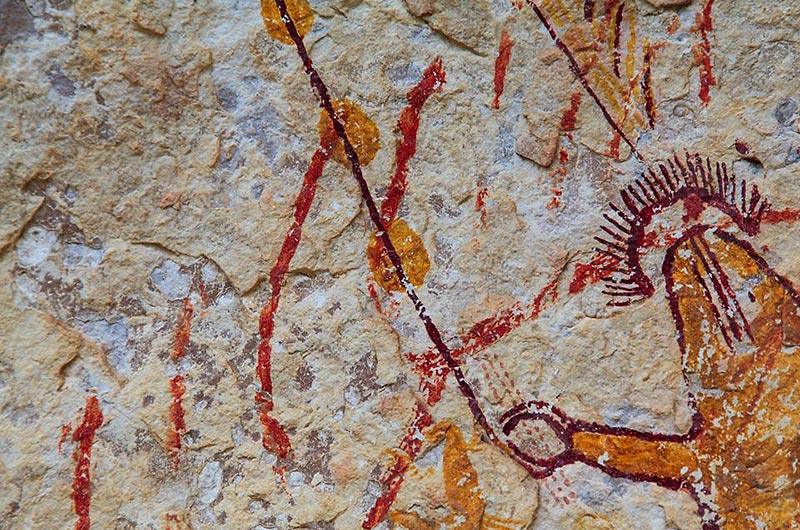
Long before books, before written language, before cities or borders, humans told their stories on stone. They painted beliefs onto rock walls, ground minerals into pigments, and turned the landscape itself into a living archive. Thousands of years later, those stories remain—etched, layered, and remarkably intact—waiting to be read.
That enduring relationship between humans and stone is at the heart of Impressions in Stone, a new fireside chat series launching this winter at Texas Counter Fitters.
Presented in partnership with the Perot Museum of Nature and Science and Shumla Archaeological Research & Education Center, the series invites attendees to rethink stone not as a static material, but as humanity’s oldest creative medium—one that bridges science, archaeology, and art in unexpectedly modern ways.
Moderated by Candy Evans, Founder and Publisher of Candy’s Dirt, the conversations bring together two leading voices: Jessica Hamlin, President and Texas History Program Director of The Summerlee Foundation (below, left), and Caroline Im, Director of Gems & Minerals at the Perot Museum (below right). Together, they explore how geology and human creativity have been intertwined for millennia—and why that connection still matters.

The first session, Using Stone as Canvas (January 21), delves into the extraordinary rock art of the Lower Pecos region of Texas. Painted more than 5,000 years ago, these monumental, multi-story murals were created using mineral pigments sourced directly from the surrounding landscape—iron oxides for reds and yellows, manganese for black, and lime-based whites applied in precise, intentional layers. Far from primitive markings, the works reveal complex cosmology, storytelling, and communal knowledge carried across generations.
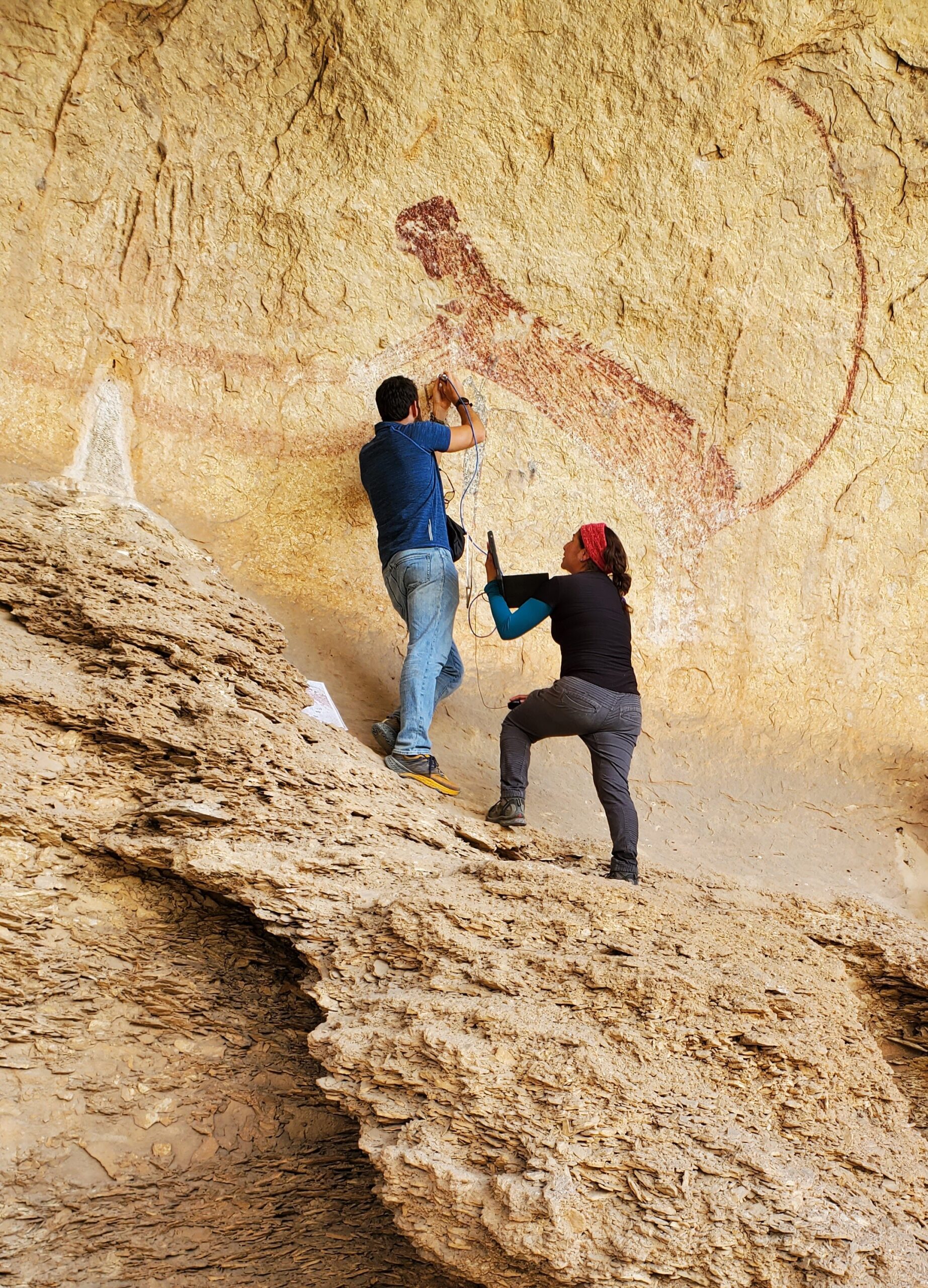
“These weren’t casual paintings,” Hamlin explains. “They were intentional, layered, and meaningful—created to teach, to connect communities, and to carry knowledge forward.” Often described as North America’s oldest “books,” the murals challenge modern assumptions about early cultures and redefine what sophisticated art can look like. “We call them the oldest books in North America because stone is what endured,” she adds. “It holds stories that paper never could.”
The second session, Using Stone to Create Art (February 25), shifts the focus from surface to substance. Here, Im explores the minerals themselves—how raw elements like calcite, hematite, and gypsum have been refined, transformed, and repurposed across time. From ancient pigments to modern architectural stone, attendees will gain insight into how the same materials that shaped early expression continue to influence contemporary design, durability, and beauty
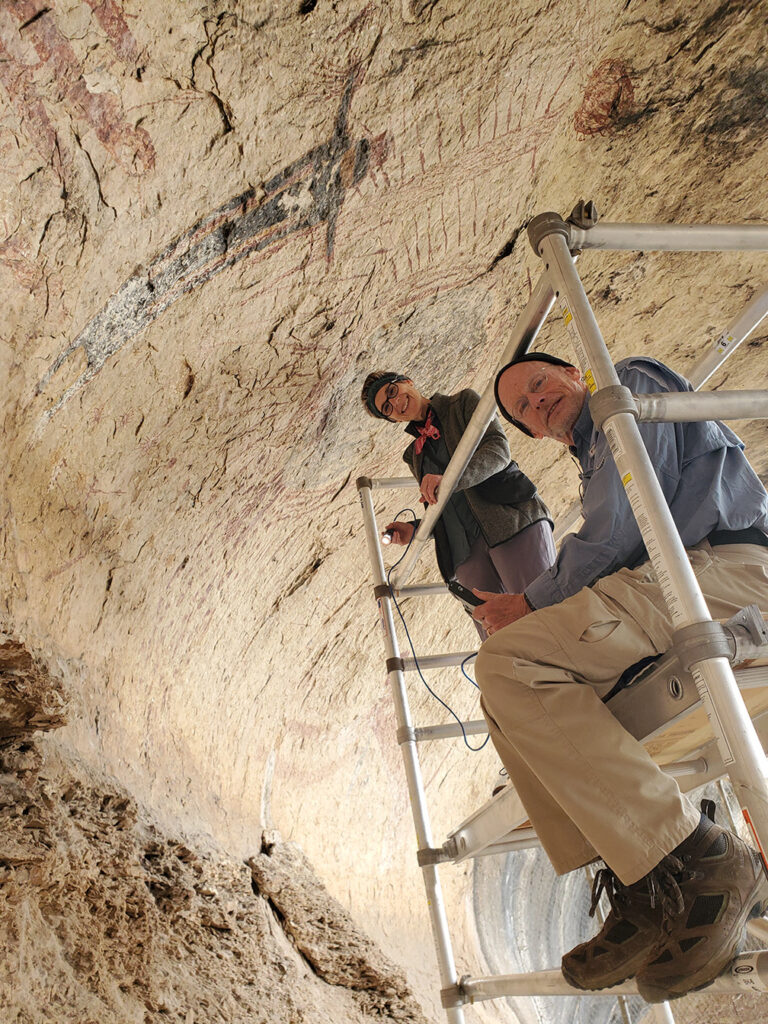
“The work required to create mineral pigments is intensive,” Im says. “Finding the source, refining it, purifying it—none of that happens by accident.” That level of material intelligence, she notes, underscores just how sophisticated early cultures were. It also reveals a surprising continuity. “The same minerals used in ancient pigments are still used today because they’re stable, durable, and beautiful.”
What makes Impressions in Stone especially compelling is its accessibility.
This is not a lecture series for specialists, but a conversation designed to spark curiosity. The fireside format allows ideas to unfold naturally, connecting ancient practices to everyday experiences—why certain stones endure, how color is created, and what it means to live—quite literally—among materials shaped by millions of years of geological history.
“You’ve probably seen these minerals every day,” Im says. “You just haven’t thought about them this way.”
YOUR COMMENT