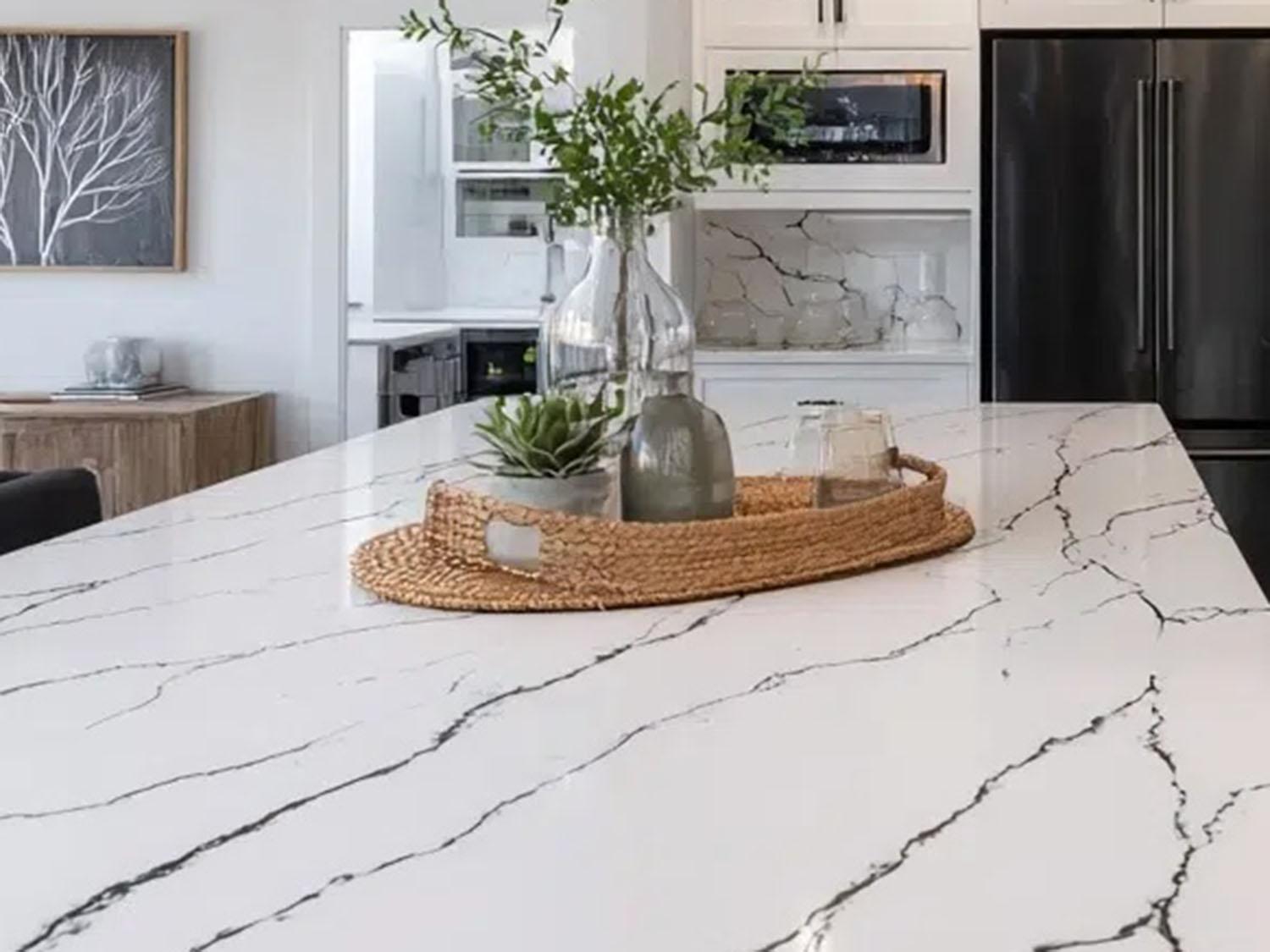
Engineered surfaces are designed to deliver consistency, predictability, and ease of use. Materials like quartz and porcelain are manufactured under controlled conditions, which allows for uniform color, pattern, and finish from slab to slab. For many homeowners, that reliability makes planning and decision-making feel simpler and more comfortable.
Designed for Consistency
Quartz and porcelain are created using precise manufacturing processes that blend natural materials with resins or high-temperature firing. This result is surfaces that look consistent across installations, with minimal variation. What homeowners see in the showroom is very close to what they can expect once the surface is installed.
Everyday Performance Benefits
Engineered surfaces tend to resist staining well and generally require less routine maintenance than many natural stones. This makes them appealing for spaces that are frequently used. Thanks to their predictable performance, they’re a smart choice for busy households.
Understanding Long-Term Behavior
Over time, engineered materials behave differently than natural stone. Some are more sensitive to direct heat, and most are designed to remain visually consistent. Understanding these differences helps homeowners choose materials that align with how they want their space to function and perform over the long term.